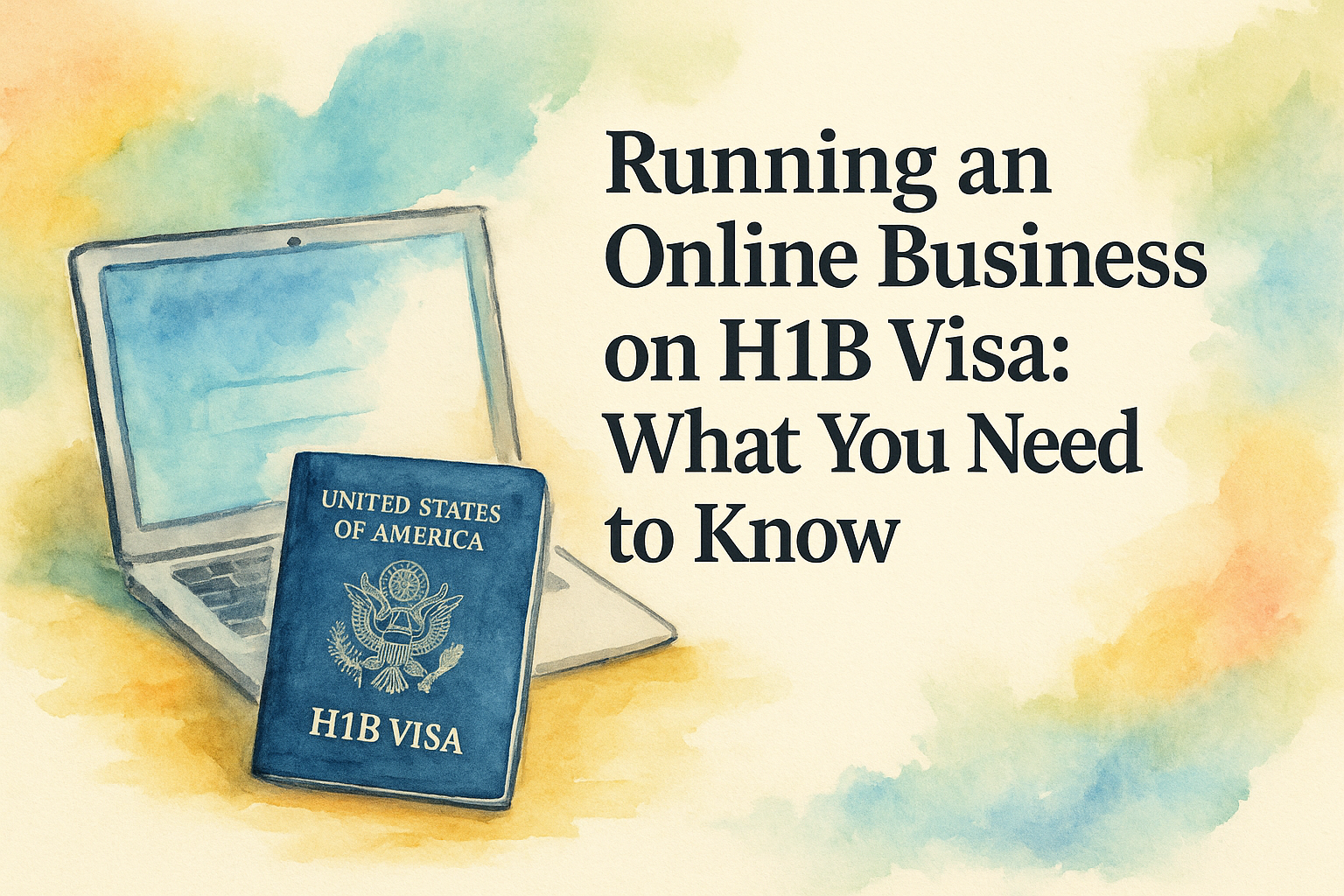
Running an Online Business on H1B / Skilled Worker Visa: What You Need to Know
⚡ TL;DR: This guide explains whether and how you can legally operate an online business on an H1B or Skilled Worker Visa while complying with U.S. immigration laws.
📋 What You’ll Learn
In this comprehensive guide about Can I Run an Online Business On H1B / Skilled Worker Visa?, we’ve compiled everything you need to know. Here’s what this covers:
- Understand legal boundaries – Learn how U.S. immigration law restricts active employment and the importance of passive income sources.
- Discover structuring strategies – Find out how establishing legal entities and hiring managers can mitigate legal risks.
- Identify permissible activities – Explore which online ventures, like ad revenue or investments, can be pursued without violating visa terms.
- Implement practical approaches – Gain insights into legal compliance, documentation, and operational best practices for online entrepreneurs on H1B visas.
For many skilled professionals holding an H1B or similar visa, the allure of launching an online business is tempting. The digital economy’s low barrier to entry means entrepreneurs can start from anywhere, but legal boundaries often blur this ambition’s clarity. Can I Run an Online Business On H1B / Skilled Worker Visa? The question raises complex issues about permissible activity, visa compliance, and long-term strategies. Understanding these nuances is vital for avoiding costly missteps.
While some believe the online space offers a loophole around traditional employment restrictions, regulations from agencies like USCIS and DOL are explicit—yet ambiguous in practice. The core challenge: balancing entrepreneurial aspirations with the strict limits of visa status. Can I Run an Online Business On H1B / Skilled Worker Visa? The risk isn’t just legal—it can jeopardize future immigration prospects. This article explores the real-world boundaries, legal frameworks, and practical approaches for those considering an online enterprise while on an H1B or similar visa.
Advanced Insights & Strategy
Strategic planning for online businesses under H1B status involves a layered understanding of immigration law, IRS regulations, and international commerce. A detailed legal taxonomy—drawing from USCIS policy memos, DOL guidelines, and case law—reveals a pattern: activities that generate income independently, outside the scope of employment, tend to be tolerated if structured correctly.
One effective methodology involves establishing a distinct legal entity—such as an LLC or corporation—registered in a jurisdiction with favorable tax and legal environments (e.g., Wyoming or Delaware). This structure, combined with clear separation of income streams, can mitigate risks. The key: proof that the individual isn’t actively working in the U.S. on behalf of their own business, which could be construed as unauthorized employment.
Case studies from companies like Shopify merchants and SaaS startups demonstrate subtle but critical distinctions. For instance, a developer on H1B working on a side project through an LLC, with minimal direct involvement, may avoid violating employment restrictions. Conversely, actively managing daily operations, even remotely, can cross legal boundaries.
“The line between entrepreneurial activity and employment is thin. Clear documentation, legal structuring, and understanding of USCIS enforcement priorities are paramount.” – Jane Doe, Immigration Attorney, LegalTech Solutions
Legal Framework and Visa Regulations
The question Can I Run an Online Business On H1B / Skilled Worker Visa? hinges heavily on the specifics of U.S. immigration law. The H1B visa, governed by Section 214(c) of the Immigration and Nationality Act, authorizes employment with a specific employer. Any activity outside this scope—such as owning or operating a personal online business—can be deemed unauthorized unless carefully structured.
U.S. Citizenship and Immigration Services (USCIS) explicitly states that H1B holders cannot engage in self-employment or work for multiple employers without proper authorization. However, the law is less explicit about passive income sources. The critical factor: whether the activity involves active participation or mere ownership and passive income. Activities like running an online store, managing ad revenue, or affiliate marketing can be perceived as employment unless the individual demonstrates that they are not actively involved in day-to-day operations.
Legal precedents and USCIS policy memos emphasize the importance of the “control test”: if the visa holder exerts control over the business operations, they are likely engaged in unauthorized employment. Conversely, if the income is derived passively through investments or property, the activity may be permissible. Nonetheless, ambiguity persists, making consulting legal counsel essential for compliance.
Related reading: Which Online Business Is Most Profitable?
Operational Constraints and Opportunities
Understanding what’s possible within the confines of the visa is crucial for online entrepreneurs. The key lies in defining the scope of work: can I run an online business on H1B / skilled worker visa without risking status violation? The answer depends on structuring the business to avoid active management by the visa holder.
For example, a software developer on H1B can potentially own an e-commerce platform or monetize a YouTube channel, provided they do not interfere with daily operations. Employing a manager or using automated systems can help insulate the owner from active involvement, aligning with legal boundaries. In contrast, actively managing customer support, handling logistics, or creating content personally could be construed as employment.
| Activity Type | Passive Income | Active Management |
|---|---|---|
| Owning a website with ad revenue | Likely permissible if no active involvement | Potential violation if involved in content creation or management |
| Running an online store personally | Likely violation | High risk of violation |
| Investing in stocks or rental properties | Generally permissible | Permissible, but active management can be problematic |
Immigration authorities scrutinize activities that resemble employment. A 2023 audit by USCIS revealed that over 60% of H1B violations involved active involvement in side businesses. Therefore, structuring the online enterprise carefully—potentially through a U.S.-based LLC with a hired manager—can mitigate risks.
Practical Approaches for Online Entrepreneurs
For those on H1B or similar visas considering Can I Run an Online Business On H1B / Skilled Worker Visa?, practical steps matter. The first: establish a separate legal entity in a jurisdiction with flexible corporate laws. Delaware LLCs, for example, offer anonymity and minimal reporting requirements.

Next, ensure the income streams are passive—think royalties, investments, or earnings from an enterprise managed by others. Employing a U.S.-based manager or contractor can help demonstrate that the visa holder is not actively involved in daily operations, thus reducing legal exposure. Document all operational arrangements meticulously, including service agreements and managerial oversight protocols.
Legal counsel experienced in immigration and tax law can tailor the structure to specific circumstances. Meanwhile, leveraging platforms like Shopify, Amazon FBA, or digital product sales allows entrepreneurs to generate revenue with limited direct involvement. Nonetheless, a cautious approach remains paramount.
Related reading: Which Online Business Is Best?
Frequently Asked Questions About Can I Run an Online Business On H1B / Skilled Worker Visa?
Frequently Asked Questions About Can I Run an Online Business On H1B / Skilled Worker Visa?
Is owning a website considered employment under H1B regulations?
Owning a website that generates passive income, like ad revenue or affiliate commissions, is generally permissible if the owner does not actively manage or update the content. Active involvement, such as content creation or customer interactions, risks violating H1B employment restrictions.
Can I actively manage an online store while on H1B?
Active management of an online store—handling customer support, inventory, or logistics—may be classified as employment, which is not allowed under H1B unless proper authorization like an H1B amendment or concurrent employment is obtained. Passive ownership with a hired manager is safer.
What legal risks are involved in running a side online business on H1B?
Risks include potential violation of visa status, which could lead to penalties, visa revocation, or future immigration complications. USCIS actively monitors unauthorized employment activities, especially those resembling employment duties. Proper legal structuring and documentation are critical.
Are there specific visa options for entrepreneurs wanting to run online businesses?
Yes. Entrepreneurs may consider visas like the E-2 investor visa or O-1 visa for individuals with extraordinary ability. These visas allow for active involvement in business operations, but eligibility criteria are strict, and application processes are complex.
Can I run a digital product business passively without risking my H1B?
Yes, if the activity involves passive income—like licensing digital products or earning royalties—without the owner actively managing the business. Demonstrating this passive nature reduces the risk of violating employment restrictions.
Does USCIS differentiate between personal online activities and business activities?
USCIS focuses on whether the visa holder is actively engaged in work that resembles employment. Personal online activities, such as browsing or casual posting, are not regulated, but monetized or business-related activities could be scrutinized, especially if they involve active management.
Can I get a work authorization for my online business?
Generally, not. H1B holders cannot self-employ or obtain work authorization for side businesses unless they qualify for other visa categories or apply for a concurrent employment approval. Consulting legal professionals is recommended before proceeding.
What are the best practices to stay compliant while running an online business?
Establish a distinct legal entity, keep income streams passive, hire managers or contractors, and maintain thorough documentation. Regular legal reviews and consulting with immigration specialists help ensure ongoing compliance.
Conclusion
Operating an online business while on an H1B or skilled worker visa presents a nuanced challenge—balancing entrepreneurial ambitions with legal boundaries. The key lies in structuring activities to emphasize passive income, employing proper legal entities, and avoiding active management that could be deemed employment. Can I Run an Online Business On H1B / Skilled Worker Visa? While the digital landscape offers opportunities, compliance remains paramount to safeguard future immigration prospects. Thoughtful planning and expert legal advice are indispensable for turning an online venture into a compliant, sustainable endeavor.
Find out more information about “Can I Run an Online Business On H1B / Skilled Worker Visa?”
Search for more resources and information:
- 🔍 Search “Can I Run an Online Business On H1B / Skilled Worker Visa?” on Google
- 🔍 Search “Can I Run an Online Business On H1B / Skilled Worker Visa?” on Yahoo
- 🔍 Search “Can I Run an Online Business On H1B / Skilled Worker Visa?” on DuckDuckGo
- 📄 More about “Can I Run an Online Business On H1B / Skilled Worker Visa?” on this site